Showing posts with label article. Show all posts

Monday, February 13, 2023

Theory of Everything

T
he Theory of Everything (ToE) is a hypothetical concept that aims to describe the underlying principles and forces that govern the universe. It's a grand idea that has captivated scientists, philosophers, and the general public for centuries. ToE is a unifying framework that seeks to explain the behavior of all physical phenomena, from the smallest subatomic particles to the largest structures in the universe, in a single, coherent picture.

In physics, there are four fundamental forces that govern the behavior of matter and energy in the universe: gravity, electromagnetism, the strong nuclear force, and the weak nuclear force. These forces interact with one another and determine the behavior of matter and energy in the universe. The ToE, if it were to be discovered, would aim to describe the fundamental nature of these forces and ho

Tuesday, May 16, 2017

Cosmology and Culture

Joel R. Primack
Professor of Physics, University of California, Santa Cruz

There is no way to describe scientifically the origin of the universe without treading upon territory held for millennia to be sacred. Beliefs about the origin of the universe are at the root of our consciousness as human beings. This is a place where science, willingly or unwillingly, encounters concerns traditionally associated with a spiritual dimension.

For thousands of years people have wondered, speculated, and argued about the origin of the universe without actually knowing anything about it. In the closing years of the twentieth century, we're learning enough to begin to peer across the gulf that separates our universe from its source at the beginning of-or perhaps before-the Big Bang. A story is emerging in modern cosmology that will, if it follows the pattern of earlier shifts in cosmology, change our culture in ways no one can yet predict. It is important to start now to speculate on the possible meanings for our time of this emerging cosmological story. Rather than assuming that science and spirit are separate jurisdictions, I assume that reality is one, and that truth grows and evolves with the universe of which it speaks.

Predicting the Next 100 Years - Physics of the Future

by Michio Kaku over a year ago

When I was a child, two experiences helped to shape the person I am today and spawned two passions that have helped to define my entire life.
First, when I was eight years old, I remember all the teachers buzzing with the latest news that a great scientist had just died. That night, the newspapers printed a picture of his office, with an unfinished manuscript on his desk. The caption read that the greatest scientist of our era could not finish his greatest masterpiece. What, I asked myself, could be so difficult that such a great scientist could not finish it? What could possibly be that complicated and that important? To me, eventually this became more fascinating than any murder mystery, more intriguing than any adventure story. I had to know what was in that unfinished manuscript.
Later, I found out that the name of this scientist was Albert Einstein and the unfinished manuscript was to be his crowning achievement, his attempt to create a “theory of everything,” an equation, perhaps no more than one inch wide, that would unlock the secrets of the universe and perhaps allow him to “read the mind of God.”
But the other pivotal experience from my childhood was when I watched the Saturday morning TV shows, especially the Flash Gordon series with Buster Crabbe. Every week, my nose was glued to the TV screen. I was magically transported to a mysterious world of space aliens, starships, ray gun battles, underwater cities, and monsters. I was hooked. This was my first exposure to the world of the future. Ever since, I’ve felt a childlike wonder when pondering the future.

Thursday, September 17, 2015

Why you should start work at 10am

We shouldn’t make everyone come in at 9am just because it suits the boss’s sleeping patterns. It’s time to stagger starting times and let 30-somethings come in later, says one leading sleep scientist

Lots of us know we are sleep-deprived, but imagine if we could fix it with a fairly simple solution: getting up later. In a speech this week at the British science festival, Dr Paul Kelley, clinical research associate at the Sleep and Circadian Neuroscience Institute at Oxford University, called for schools to stagger their starting times to work with the natural biological rhythms of their students. It would improve cognitive performance, exam results and students’ health (sleep deprivation has been linked with diabetes, depression, obesity and an impaired immune system).

It follows a paper, published last year, in which he noted that when children are around 10 their biological wake-up time is about 6.30am; at 16 this rises to 8am; and at 18, someone you may think of as a lazy teenager actually has a natural waking hour of 9am. The conventional school starting time works for 10-year-olds, but not 16- and 18-year-olds. For the older teenagers, it might be more sensible to start the school day at 11am or even later. “A 7am alarm call for older adolescents,” Kelley and his colleagues pointed out in the paper, “is the equivalent of a 4.30am start for a teacher in their 50s.”

Raising Children Without Religion May Be A Better Alternative, Suggests New Research

Gone are the days of the unyielding God-fearing mother as the archetype of good parenting, suggests a recent article from the Los Angeles Times. According to multiple reports, research has shown that a secular upbringing may be healthier for children. According to a 2010 Duke University study, kids raised this way display less susceptibility to racism and peer pressure, and are “less vengeful, less nationalistic, less militaristic, less authoritarian, and more tolerant, on average, than religious adults.” But the list of benefits doesn’t stop there.

Citing Pew Research, the Times’ Phil Zuckerman notes that there’s been a recent spike in American households who categorize themselves as "Nones" — their religious affiliation being “nothing in particular.” According to Zuckerman, modern nonreligious adults account for 23 percent of Americans. As early as the ’50s, that figure was only four percent. And with godlessness on the rise, researchers have begun analyzing the benefits of nonreligious child rearing more closely.

Wednesday, September 16, 2015

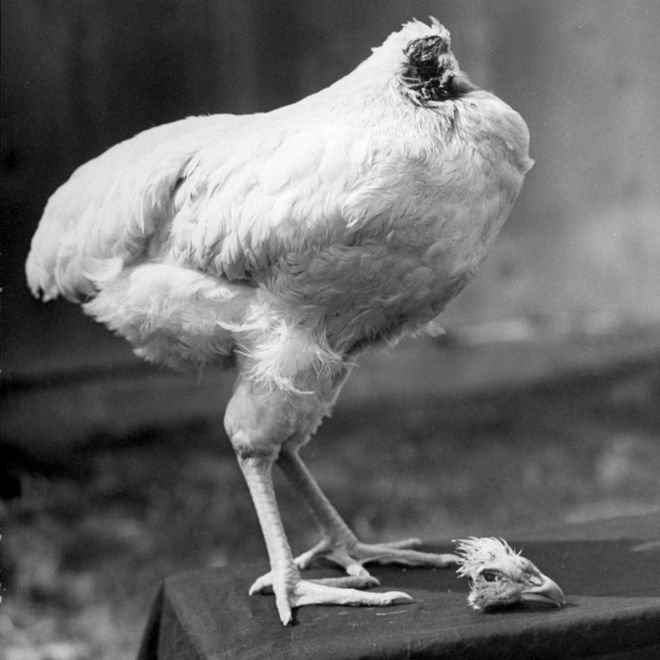
The chicken that lived for 18 months without a head

Seventy years ago, a farmer beheaded a chicken in Colorado, and it refused to die. Mike, as the bird became known, survived for 18 months and became famous. But how did he live without a head for so long, asks Chris Stokel-Walker.
On 10 September 1945 Lloyd Olsen and his wife Clara were killing chickens, on their farm in Fruita, Colorado. Olsen would decapitate the birds, his wife would clean them up. But one of the 40 or 50 animals that went under Olsen's hatchet that day didn't behave like the rest.
"They got down to the end and had one who was still alive, up and walking around," says the couple's great-grandson, Troy Waters, himself a farmer in Fruita. The chicken kicked and ran, and didn't stop.
It was placed in an old apple box on the farm's screened porch for the night, and when Lloyd Olsen woke the following morning, he stepped outside to see what had happened. "The damn thing was still alive," says Waters.
"It's part of our weird family history," says Christa Waters, his wife.
Waters heard the story as a boy, when his bedridden great-grandfather came to live in his parents' house. The two had adjacent bedrooms, and the old man, often sleepless, would talk for hours."He took the chicken carcasses to town to sell them at the meat market," Waters says.

IS MONOGAMY OVER?


Monogamy Is Not Natural But It’s Nice

By
David Barash


Monogamy is under siege from our biology itself. Men are typically larger than women, have more muscle mass, are more inclined to violence and become sexually and socially mature later. These traits are characteristic of an animal species in which one male competes with other males to mate with multiple females.

For men, the underlying evolutionary calculus of polygamy is clear: the possibility for a larger number of offspring and thus enhanced evolutionary fitness. For women, the reasoning is more nuanced: the possibility of better genes for their children, improved access to material resources and social advancement. It can be argued that a woman would be better off as the 20th wife of a very wealthy man than as the only wife of a pauper.

Antibiotic resistance: myths and misunderstandings

I’ve been involved in a few discussions of late on science-based sites around yon web on antibiotic resistance and agriculture–specifically, the campaign to get fast food giant Subway tostop using meat raised on antibiotics, and a graphic by CommonGround using Animal Health Institute data, suggesting that agricultural animals aren’t an important source of resistant bacteria. Discussing these topics has shown me there’s a lot of misunderstanding of issues in antibiotic resistance, even among those who consider themselves pretty science-savvy.
I think this is partly an issue of, perhaps, hating to agree with one’s “enemy.” Vani Hari, the “Food Babe,” recently also plugged the Subway campaign, perhaps making skeptics now skeptical of the issue of antibiotics and agriculture? Believe me, I am the farthest thing from a “Food Babe” fan and have criticized her many times on my Facebook page, but unlike her ill-advised and unscientific campaigns against things like fake pumpkin flavoring in coffee or “yoga mat” chemicals in Subway bread, this is one issue that actually has scientific support–stopped clocks and all that. Nevertheless, I think some people get bogged down in a lot of exaggeration or misinformation on the topic.
So, some thoughts. Please note that in many cases, my comments will be an over-simplification of a more complex problem, but I’ll try to include nuance when I can (without completely clouding the issue).
First–why is antibiotic resistance an issue?
Since the development of penicillin, we have been in an ongoing “war” with the bacteria that make us ill. Almost as quickly as antibiotics are used, bacteria are capable of developing or acquiring resistance to them. These resistance genes are often present on transmissible pieces of DNA–plasmids, transposons, phage–which allow them to move between bacterial cells, even those of completely different species, and spread that resistance. So, once it emerges, resistance is very difficult to keep under control. As such, much better to work to prevent this emergence, and to provide conditions where resistant bacteria don’t encounter selection pressures to maintain resistance genes (1).
In our 75-ish years of using antibiotics to treat infections, we’ve increasingly found ourselves losing this war. As bacterial species have evolved resistance to our drugs, we keep coming back with either brand-new drugs in different classes of antibiotics, or we’ve made slight tweaks to existing drugs so that they can escape the mechanisms bacteria use to get around them. And they’re killing us. In the US alone, antibiotic-resistant infections cause about 2 million infections per year, and about 23,000 deaths due to these infections–plus tens of thousands of additional deaths from diseases that are complicated by antibiotic-resistant infections. They cost at least $20 billion per year.

Tuesday, July 28, 2015

The art of dying

Ranjana Srivastava

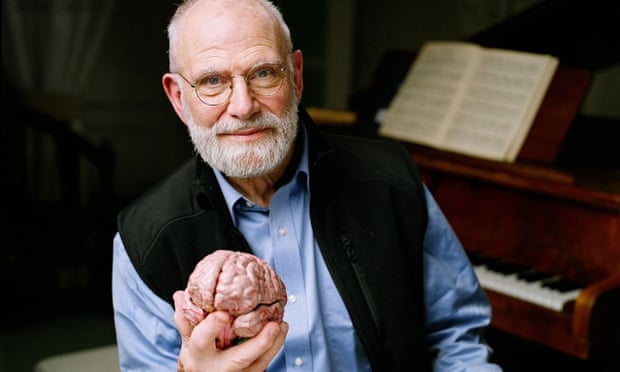
Like millions of readers I had a lump in my throat as I read Oliver Sacks reveal his diagnosis of terminal cancer earlier this year. Every doctor aspires to be a little like Sacks whether for his sharp intellect, his obvious humanity or his exquisite writings that go to the core of what it means to be human and frail.

In February he calmly declared that metastatic melanoma affecting his liver meant that his luck had run out. I found it hard to share his calm but then like the genial, grandfather-figure he is, he reassured us, oncologists and all, that he still felt intensely alive, wanting to “deepen my friendships, to write more, to achieve new levels of understanding and insight.”

His mention of finding a new focus and perspective resonated with me – it is as close to a universal finding as there is in clinic, where ordinary individuals and famous people all say that cancer forced them to contemplate their life and legacy.

Friday, March 27, 2015

Why Entrepreneurs (Not Big Oil) Will Create the Future of Energy

Last month, both BP and Shell produced statements in support of a carbon-pricing scheme, which in principle raises costs for the oil giants. 

Many remain skeptical of these oil companies’ commitment to addressing climate change, and their previous attempts to green up their image don’t inspire further confidence.

Ten years ago, many major oil companies had visionary leaders that pledged to transform their companies from fossil fuels to “energy” companies. Today they have committed themselves “back to basics”—in other words back to oil and gas drilling only.

Friday, March 13, 2015

Can the world buy its way out of hunger?

Hunger and malnutrition are among the most persistent obstacles separating the world we want from the one we have today.
The lack of access to nutritious food limits futures, restricts individual economic growth and, worst of all, destroys countless lives each year. So it is a cruel irony that more than half of the world’s poorest people struggling with hunger and malnutrition are, themselves, family farmers.
Too often farmers in the developing world earn a marginal li

Thursday, March 12, 2015

How to Make the Sustainable Development Goals Work It’s simple: Prioritize women and families.

The two of us met for the first time more than a decade ago, in 2003, in the small rural village of Momemo, an hour’s drive and a world away from the urban bustle of Maputo, Mozambique’s capital and largest city. We were there to gain a deeper understanding of the impact of malaria on the lives of villagers in areas particularly hard hit by the disease.